

Key points
- The United States, another crucial destination, will become a more difficult market from August 2025 onwards as a result of the new import tariffs.
- Tariffs – A 19 percent duty on Thai jewelry imports from August 2025 will directly impact competitiveness in one of Thailand’s largest markets.
- Thailand’s jewelry industry, one of the country’s most important export and luxury sectors, is entering a period of turbulence.
Bangkok Gems News: Thailand’s jewelry industry, one of the country’s most important export and luxury sectors, is entering a period of turbulence. Analysts forecast a contraction in total market value of about 1.8 percent in 2025, followed by a deeper decline of roughly 2.2 percent in 2026. Both exports and domestic sales are expected to weaken, raising concerns about long-term competitiveness.
Exports, which have historically been the strongest pillar of the industry, are projected to shrink by 1.1 percent in 2025 and 1.9 percent in 2026. The domestic market, which accounts for about a quarter of total value, is expected to fall even more sharply, dropping 3.8 percent in 2025 and a further 3.0 percent in 2026. This Bangkok Gems News report outlines the scale of the challenges and the six key risks now facing the sector.
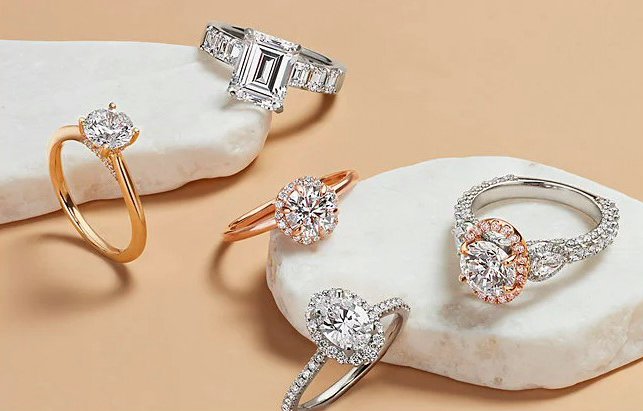
The forecast for the Thai Gems and Jewelry industry is rather bleak for the next two years
Image Credit: StockShots
Export Market Weakness
Thailand’s jewelry exports—spanning gold, gemstones, and silver jewelry—have traditionally been a source of pride. However, several of the country’s largest markets are now showing signs of strain. Hong Kong, which makes up more than a quarter of exports, is suffering from slowing demand in mainland China. India, responsible for around 8 percent of Thai jewelry exports, is also expected to see reduced orders due to economic uncertainty.
The United States, another crucial destination, will become a more difficult market from August 2025 onwards as a result of the new import tariffs. Dubai remains a relatively stable outlet thanks to its tariff advantages, but its share alone cannot offset the downturn elsewhere. Taken together, the global environment points toward continued weakness for Thai exports over the next two years.
Domestic Sales Under Pressure
The home market is no less challenging. Jewelry sales within Thailand are facing multiple headwinds, including rising household debt, higher gold prices, and cautious consumer spending. Domestic demand is particularly sensitive to the tourism sector, which has not yet returned to its former strength.
Chinese tourists, once the highest-spending segment, have been slow to return in large numbers. Even if tourist arrivals climb in 2026, higher jewelry prices are likely to suppress overall spending. Local retailers will therefore continue to feel pressure as consumers limit purchases to essential or lower-priced products.
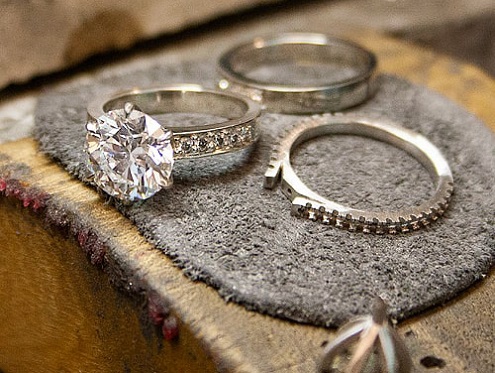
The Thai jewellery manufacturing industry will be facing many hurdles in coming months
Image Credit: StockShots
Six Major Risks Confronting the Industry
The jewelry sector must now contend with six critical risks that could reshape its future trajectory:
-New U.S. Tariffs – A 19 percent duty on Thai jewelry imports from August 2025 will directly impact competitiveness in one of Thailand’s largest markets.
-Rising Import Competition – Low-cost jewelry from China and Hong Kong is entering Thailand in greater volumes, undercutting local producers.
-Shortage of Skilled Labor – Fewer skilled gem cutters and jewelry artisans are available, reducing Thailand’s traditional advantage in craftsmanship.
-Raw Material Supply Risks – Limited availability of key raw materials and alloys raises the prospect of production delays and cost increases.
-Currency Volatility – A stronger baht against the U.S. dollar could further weaken export competitiveness.
-Technological Change – Rapid progress in 3D printing and precision machining abroad means other producers can replicate quality jewelry at much lower costs.
Growing Sustainability Demands
In addition to these six threats, jewelry businesses must also contend with stricter international requirements on sustainability and ethical sourcing. Global buyers increasingly demand proof of compliance with environmental and social standards. Securing certifications, such as those provided by the Responsible Jewellery Council, is becoming essential to maintain credibility and access to premium markets. Companies that fail to adapt risk losing their position in global supply chains.
Pathways for Survival
Despite the difficult outlook, opportunities exist for businesses prepared to act decisively. Firms that invest in technology, strengthen supply chain transparency, and train the next generation of artisans can maintain a competitive edge. Cost management will also be critical, with strategies needed to gradually pass on higher costs without alienating buyers.
The ability to adapt quickly will separate the companies that endure from those that struggle. Thailand’s jewelry sector has built its reputation on skill, heritage, and creativity. Preserving that reputation in the face of these challenges will demand innovation, agility, and commitment to sustainable practices.
Reference:
For the latest on the Thai jewelry Industry, keep on logging to Bangkok Gems News