

Key points
- With the holiday shopping season approaching, cyber security experts are warning Bangkok’s jewelry retailers, online gems sites and luxury brands to be on high alert as cyberattacks targeting online operations, payment systems, and logistics partners are expected to surge.
- According to experts quoted in this Bangkok Gems News report, hackers are shifting from attacking individual retailers to targeting shared service providers and supply chains, making it harder for businesses to predict where the next breach might strike.
- For the latest on cybercrimes in the gems and jewelry industry, keep on logging to Bangkok Gems News.
Bangkok Gems News: Bangkok’s Jewelry Trade Faces Rising Cyber Threats
With the holiday shopping season approaching, cyber security experts are warning Bangkok’s jewelry retailers, online gems sites and luxury brands to be on high alert as cyberattacks targeting online operations, payment systems, and logistics partners are expected to surge. Over the past few months, hackers have increasingly focused on high-value retail sectors, and Thailand’s growing online jewelry scene is now in their crosshairs.

Cybersecurity experts warn Bangkok’s jewelry retailers to brace for more ransomware and data breach threats targeting online sales and logistics systems.
Image Credit: Andrey Popov/Shutterstock
Ransomware Attacks Disrupt Retail Operations
The recent ransomware attack on Japanese retailer Muji’s logistics partner Askul Corp., which brought several retail websites to a halt, has served as a wake-up call for the entire Asian retail sector. Many in Bangkok’s jewelry trade—especially high-end gold and gemstone sellers—depend heavily on cloud-based sales systems and online delivery management tools that could be equally vulnerable.
According to experts quoted in this Bangkok Gems News report, hackers are shifting from attacking individual retailers to targeting shared service providers and supply chains, making it harder for businesses to predict where the next breach might strike.
Thailand’s Growing Online Jewelry Market at Risk
In recent years, Thailand’s jewelry and gemstone businesses have invested heavily in e-commerce to reach both domestic and international buyers. This includes retailers operating via online marketplaces and luxury boutiques offering direct-to-customer purchases through social media and live shopping. However, many of these platforms lack robust digital defenses. Cybersecurity specialists warn that ransomware gangs are likely to exploit weaknesses in third-party platforms that handle payment processing, delivery tracking, or even website hosting—potentially putting customer data, payment details, and brand credibility at risk.
Lessons from Global Luxury Breaches
International fashion and luxury brands have already been victims of similar attacks. Dior, Harrods, and Marks & Spencer have suffered breaches that exposed sensitive customer information. These incidents highlight that no retailer—regardless of prestige or size—is immune. Analysts believe that Bangkok’s jewelers must learn from these global examples and invest in preventive measures, including secure hosting, stronger password management, and contingency response plans in case of data breaches.
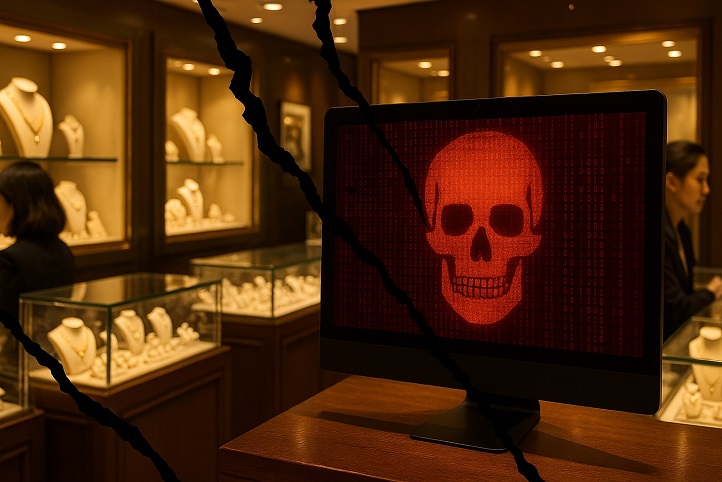
Bangkok’s jewelry retailers are warned to take extra safeguard in their internal computer systems.
Image Credit: AI-Generated
Impact on Consumer Trust and Brand Image
When online systems go offline or customer data is compromised, the fallout extends far beyond temporary sales losses. Consumers often lose trust, and high-end clients—especially international gemstone buyers—are unlikely to return if their personal data is mishandled. Cybersecurity experts stress that retailers must treat digital infrastructure as seriously as physical security. A ransomware hit that locks a retailer’s payment or order system for even 24 hours could disrupt exports, cause shipment delays, and weaken confidence among trade partners and buyers abroad.
Building Cyber Resilience Across the Supply Chain
Experts recommend that jewelry brands and wholesalers map their digital dependencies—from logistics partners to payment processors—and ensure every link in the chain adheres to strict security protocols. Contracts with third-party service providers should include mandatory cybersecurity clauses and data-sharing agreements in the event of a cyber incident. Businesses should also rehearse “supplier outage” playbooks that allow them to continue operations even when digital systems fail.
Why Cyber Defense Is Now Part of Jewelry Business Survival
Bangkok’s jewelry retailers are urged to take immediate preventive steps, including multi-factor authentication, regular data backups, and active monitoring for suspicious activity such as brand impersonation during downtime. As Thailand cements its position as a global jewelry hub, resilience must extend beyond shopfronts to include every technological layer that supports the trade. The evolving cyber threat landscape shows that the industry’s digital sparkle can quickly fade without proper protection. Strengthening defenses today may be the only way for jewelry businesses to safeguard both profits and prestige tomorrow.
For the latest on cybercrimes in the gems and jewelry industry, keep on logging to Bangkok Gems News.