

Key points
- For the latest on the Gems and Jewelry industry in Bangkok, keep on logging to Bangkok Gems News.
- These unseen rooms may well determine the city’s gemstone relevance in the decade ahead and will continue shaping regional markets in ways few are prepared to acknowledge.
- When a major stone changes hands at a premium in Bangkok, word spreads through trusted channels, subtly resetting expectations elsewhere.
Bangkok Gems News: Bangkok’s gemstone trade is often portrayed through official exchanges, export statistics, and glittering showroom fronts, but beneath this visible layer exists a parallel market few outsiders ever see. Across discreet hotel suites, private offices, and invitation-only clubs, high-value gemstones are quietly traded in settings deliberately removed from public bourses. These hidden trading floors have become an unspoken backbone of Southeast Asia’s gemstone pricing ecosystem.
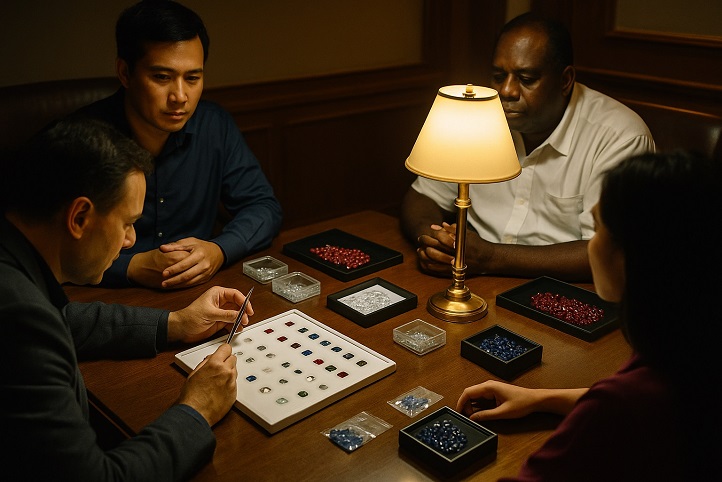
Private gemstone deals quietly redefine Bangkoks role as Southeast Asias unseen pricing powerhouse
Image Credit: AI-Generated
Unlike formal trading platforms, these informal venues thrive on trust networks built over decades. Deals are arranged through phone calls, encrypted messages, and personal referrals rather than listings or open auctions. Many transactions involve rare rubies, unheated sapphires, and high-grade spinels whose values can shift dramatically with a single negotiation. The lack of official documentation allows flexibility, speed, and discretion that formal exchanges simply cannot match. This Bangkok Gems News report notes that these informal dealings are not chaotic but rather are carefully maintained structures.
Who Trades in These Private Rooms
Participants range from veteran Thai brokers and regional middlemen to foreign buyers representing luxury houses and private collectors. Some are licensed dealers operating off-books for sensitive transactions, while others act as quiet intermediaries moving stones between borders without drawing attention. These gatherings often include gem cutters, certifiers, and financiers, all present to close deals quickly without the delays of public scrutiny.
Why Public Bourses Are Avoided
Public trading floors impose visibility, regulatory oversight, and sometimes rigid pricing expectations. For sellers holding exceptional stones, transparency can work against them by limiting negotiation leverage. Private settings allow sellers to test prices discreetly, adjust valuations in real time, and withdraw stones without market repercussions. For buyers, anonymity protects sourcing strategies and prevents competitors from tracking acquisition patterns.
How Shadow Trading Shapes Regional Prices
Despite operating out of sight, these private trades quietly influence benchmark prices across Thailand, Myanmar, Sri Lanka, and beyond. When a major stone changes hands at a premium in Bangkok, word spreads through trusted channels, subtly resetting expectations elsewhere. Over time, these off-market deals shape supply perceptions, scarcity narratives, and even auction outcomes abroad.
Risks and Rewards of an Unseen Marketplace
Operating outside official systems carries risks including fraud, verification disputes, and legal ambiguity. Yet participants accept these dangers in exchange for speed, confidentiality, and higher margins. As synthetic stones become harder to detect and certification bottlenecks grow, reliance on trusted private networks is increasing rather than fading.
What This Means for Bangkok’s Jewelry Future
Bangkok’s hidden trading floors are not signs of decline but proof of adaptability. They reflect an industry balancing tradition, discretion, and modern pressures in ways official statistics fail to capture. These unseen rooms may well determine the city’s gemstone relevance in the decade ahead and will continue shaping regional markets in ways few are prepared to acknowledge.
For the latest on the Gems and Jewelry industry in Bangkok, keep on logging to Bangkok Gems News.