

Key points
- This Gems and Jewelry News report underscores how American businesses are now facing higher landed costs of up to 44 to 50 percent on gemstones from certain countries, costs that are rapidly being passed along the value chain from importer to retailer and, ultimately, to consumers.
- The United States is the world’s largest consumer market for diamonds and fine jewelry, yet it produces only a small fraction of the gemstones it consumes.
- The United States gemstone and jewelry market is undergoing one of its most disruptive periods in decades as newly imposed tariffs on imported gemstones dramatically alter long-established supply chains.
Gems and Jewelry News: The United States gemstone and jewelry market is undergoing one of its most disruptive periods in decades as newly imposed tariffs on imported gemstones dramatically alter long-established supply chains. These tariffs, which came into force in 2025, have placed steep duties on previously untaxed loose, cut, and polished gemstones entering the US, including diamonds and a wide range of colored stones. For American jewelers, wholesalers, and retailers who have long depended on overseas sourcing, the sudden rise in import costs has introduced pricing uncertainty, inventory shortages, and difficult decisions about future sourcing strategies.
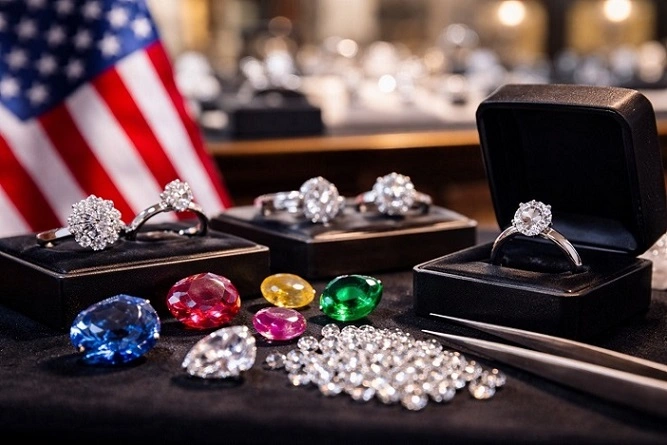
Image Credit: Bangkok Gems News
The United States is the world’s largest consumer market for diamonds and fine jewelry, yet it produces only a small fraction of the gemstones it consumes. This structural reliance on imports means the tariffs have an outsized domestic impact. This Gems and Jewelry News report underscores how American businesses are now facing higher landed costs of up to 44 to 50 percent on gemstones from certain countries, costs that are rapidly being passed along the value chain from importer to retailer and, ultimately, to consumers.
Retail Prices and Consumer Demand Under Pressure
One of the most immediate effects within the United States has been rising retail prices. Jewelers across major cities such as New York, Los Angeles, and Miami report that the increased duties have forced them to reprice inventory or absorb losses to remain competitive. For consumers, this translates into higher price tags on engagement rings, anniversary jewelry, and luxury gemstone pieces. Industry analysts warn that sustained price increases could dampen discretionary spending, particularly among middle-income buyers who form the backbone of the US jewelry market.
At the same time, consumer behavior is beginning to shift. Some buyers are delaying purchases in anticipation of market stabilization, while others are exploring alternatives such as lab-grown diamonds and lower-priced gemstone options. US retailers confirm a noticeable uptick in inquiries for lab-grown stones, driven largely by price sensitivity rather than changes in taste or aesthetics.
Strain on Small and Mid-Sized US Businesses
While large jewelry chains may have the financial resilience to manage temporary margin compression, small and mid-sized American jewelers are feeling the strain more acutely. Many operate on thin margins and rely on consistent access to imported gemstones. The tariffs have disrupted just-in-time inventory models, forcing these businesses to tie up more capital in stock or reduce their product offerings. In some cases, independent jewelers have postponed expansion plans, reduced staff hours, or scaled back marketing budgets to offset rising costs.
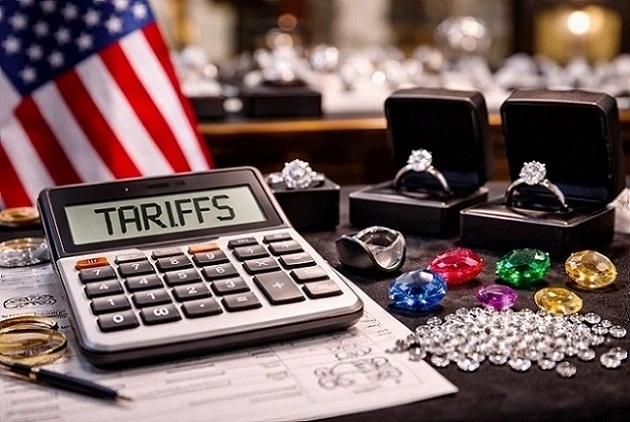
Image Credit: Bangkok Gems News
Challenges for Colored Gemstones in the US Market
The colored gemstone segment faces unique challenges in the United States. Many popular stones such as rubies, sapphires, emeralds, and tourmalines are not mined or cut economically within the country. As tariffs push prices higher, US designers who specialize in colored gemstone jewelry are struggling to maintain competitive collections. Industry associations warn that prolonged tariff pressure could shrink the diversity of gemstone jewelry available to American consumers, narrowing choice and stifling design innovation.
Supply Chain Reconfiguration and Policy Uncertainty
US importers are now reassessing long-standing supplier relationships and exploring complex workarounds to reduce tariff exposure. These include sourcing from countries with more favorable trade terms, restructuring distribution routes, or renegotiating contracts with overseas partners. However, such adjustments take time and often involve additional logistical costs, limiting their immediate effectiveness.
The lack of clarity around future US trade policy adds another layer of uncertainty. Many in the industry fear that prolonged tariffs could permanently reshape the American jewelry market, pushing it toward higher prices, reduced variety, and greater reliance on synthetic alternatives.
The unfolding situation reflects a profound transformation for the United States gemstone sector. As businesses, consumers, and policymakers grapple with the long-term implications, the tariffs are proving to be more than a trade tool—they are redefining how America buys, sells, and values gemstones in an increasingly volatile global economy, with consequences that will be felt across the market for years to come.
For the latest Gems and Jewelry News, keep on logging to Bangkok Gems News.