

Key points
- Unveiled at a high-profile breakfast event in Las Vegas, the company’s new design initiative, called Ombré Desert Diamonds, is more than just another jewelry line—it’s a strategic beacon aimed at spotlighting the natural origins and diversity of diamonds mined from the African deserts.
- For the first time in 16 years, De Beers is reviving its “beacon” program—a rare marketing push designed to unite the global diamond trade around a single narrative and aesthetic.
- Hand in hand with the design rollout, De Beers also formally launched “Origin, De Beers Group,” a new polished diamond program tied to its blockchain-based Tracr platform.
Gems and Jewellery News: A Bold Shift in the Diamond Market
De Beers, the iconic diamond powerhouse, is making a daring move to redefine luxury and rekindle consumer desire amid the growing dominance of lab-grown gems. Unveiled at a high-profile breakfast event in Las Vegas, the company’s new design initiative, called Ombré Desert Diamonds, is more than just another jewelry line—it’s a strategic beacon aimed at spotlighting the natural origins and diversity of diamonds mined from the African deserts.
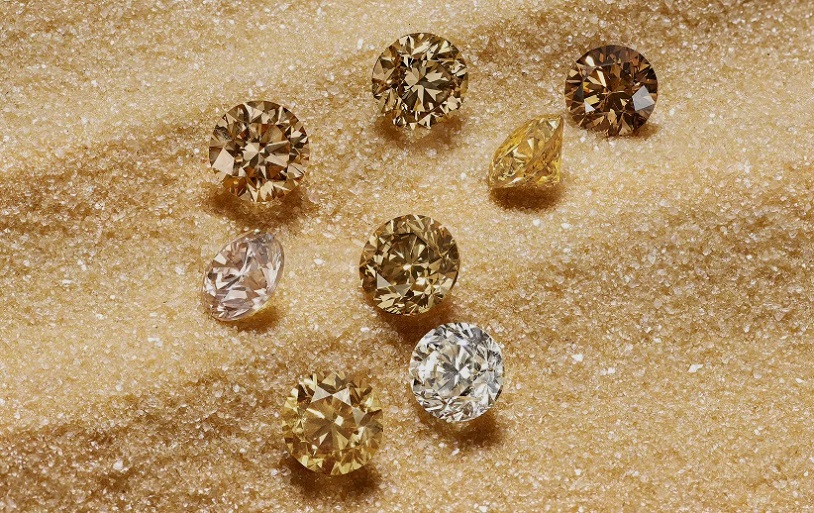
De Beers unveils new “beacon” program spotlighting desert-inspired diamonds in off- white, light yellow, and brown hues natural gems that stand apart from lab-grown stones
Image Credit: De Beers Group
For the first time in 16 years, De Beers is reviving its “beacon” program—a rare marketing push designed to unite the global diamond trade around a single narrative and aesthetic. The Ombré Desert Diamonds concept features a rich spectrum of warm diamond hues—champagne, cream, light yellow, amber, and brown—that reflect the arid beauty of their natural environment. This Gems and Jewellery News report explores how this initiative is not only a creative turn but also a calculated response to the lab-grown disruption sweeping the industry.
The Allure of Color and Origin
Colored diamonds are not new to the industry. Brands like Le Vian have long championed the appeal of chocolate and cognac diamonds. De Beers itself had early success with its “Talisman” collection, which highlighted rough and colored stones. However, what sets this latest initiative apart is its scale and timing.
With lab-grown diamonds now dominating the colorless, high-clarity segment, De Beers is carving out a niche that lab creations can’t easily replicate—natural variability and origin authenticity. “In a world where people want something unique, where they reject commoditized goods, the Desert Diamond is the answer,” said Al Cook, De Beers CEO. “Its color is unique, its origin is unique, and it contrasts completely with the endless array of synthetic, perfect stones.”
Indeed, lab-grown diamonds can now be purchased for as little as $37 per carat, making them appealing but also undermining their exclusivity. De Beers’ Ombré Desert Diamonds aim to rekindle emotional connection and storytelling around natural gems. Their pitch is that real diamonds, formed over billions of years beneath the Earth’s surface, hold an intrinsic value and personal resonance that lab-grown alternatives lack.
More Than a Design – A Movement
Unlike past beacon campaigns focused purely on style—such as 2009’s Everlon knot or the three-stone ring—Ombré Desert Diamonds is a hybrid of design and message. The pieces are intended to symbolize the vast, sun-kissed terrains of Africa where many De Beers diamonds are mined. Cook emphasized that this beacon is “about the source as much as it is about the sparkle.”
De Beers will be backing the initiative with aggressive marketing, digital storytelling, and visual campaigns to push consumer awareness and retailer participation. Stores that carry the beacon designs will also receive marketing materials to help narrate the full journey of each gem—from mine to market.
Tracing Diamonds with Tech and Transparency
Hand in hand with the design rollout, De Beers also formally launched “Origin, De Beers Group,” a new polished diamond program tied to its blockchain-based Tracr platform. With this system, every diamond can be traced back to its source, and customers can access digital provenance data along with brand-authenticated storytelling. It’s a high-tech solution to an increasingly urgent consumer question: Where did my diamond come from—and was it ethically sourced?
For retailers, this offers a unique value proposition to younger buyers, many of whom now demand traceability and transparency before making luxury purchases. Tools provided by De Beers will allow in-store experiences to integrate this data seamlessly, marrying tradition with technology.
Other Key Announcements from Las Vegas
De Beers also shared updates on its broader “Origins” strategy, a restructuring initiative aimed at optimizing operations and cutting costs amidst corporate changes at its parent company, Anglo American.
Highlights include:
-Exploration in Angola: De Beers has completed airborne geophysical surveys in Angola, marking a significant milestone in its diamond exploration operations, first announced in 2022.
-Factory Reboot in Oregon: The first production run of industrial-grade diamonds has been completed at the former Lightbox facility in Gresham, Oregon. The site has been rebranded as the Element Six Oregon Centre.
-End of Lightbox: De Beers is winding down its Lightbox lab-grown jewelry line, officially ending production this summer after signaling its exit from lab-grown fashion jewelry in 2024.
-DiamondProof Device: Earlier this year, the company launched DiamondProof, a countertop diamond testing device for U.S. retailers, enhancing point-of-sale verification tools.
These efforts are part of a broader realignment as Anglo American moves forward with plans to offload De Beers through either a sale or demerger. CEO Cook anticipates the transition process will wrap up by mid-2026.
An Industry at a Crossroads
The push toward Ombré Desert Diamonds and origin-certified gems comes at a pivotal time. The global diamond industry is grappling with oversupply, shifting consumer expectations, and growing scrutiny over environmental and ethical concerns. Lab-grown diamonds have gained market share rapidly due to their affordability and perceived sustainability, but De Beers is betting that beauty, rarity, and origin will ultimately triumph.
“In the last six months, the volatility has shown us that we must proceed carefully,” said Cook. “We’re focused on finding the right buyer, not just rushing to any buyer. But we also have the benefit of two responsible owners who care deeply about De Beers.”
In an era of increasing consumer consciousness and mass-market replication, De Beers is trying to make the case that natural diamonds—especially those with a story and a soul—are not relics of the past, but treasures of the future.
The Spark of Something New
Ombré Desert Diamonds might be more than just a new style trend. They could signal a renaissance in natural diamond appreciation, anchored by authenticity, ethical sourcing, and earthy elegance. By invoking the romance of deserts and the geological wonder of diamond formation, De Beers is rekindling the emotional value that once made diamonds “forever.”
If the campaign gains traction, it could help restore market confidence in natural diamonds while pushing back against the wave of cheap, indistinguishable lab-grown options. De Beers is not just selling stones—it’s trying to sell meaning, heritage, and uniqueness in a world that increasingly values both individuality and integrity.
For the latest Gems and Jewellery News, keep on logging to Bangkok Gems News.