

Key points
- While this strategy created a short-term buffer, it may also lead to severe restocking issues later in Q3, when importers will have to contend with the full brunt of the tariff hikes.
- De Beers reported a steep 44% year-on-year drop in first-quarter sales, totaling just US$520 million — a clear sign that the midstream is pulling back and waiting for clarity.
- — the world’s largest consumer of polished diamonds — and India — the premier global hub for cutting and polishing — has cast a shadow over the industry’s immediate future.
Gems and Jewellery News: Diamond Prices React to Tariff Drama
The global diamond market is entering a stormy new phase as rising geopolitical tensions, U.S. trade policies, and erratic consumer sentiment spark turmoil across the supply chain. In April, prices surged on news of impending U.S. tariffs on Indian diamonds, only to stabilize again when the U.S. government postponed the hike by 90 days. According to the RapNet Diamond Index (RAPI™), 1-carat diamonds rose 0.7% in April, while 0.30-carat stones saw a significant 2.8% increase, bringing their year-to-date gain to 13.2%. Meanwhile, 0.50-carat goods inched up 0.6%, and 3-carat diamonds dipped 0.3%.
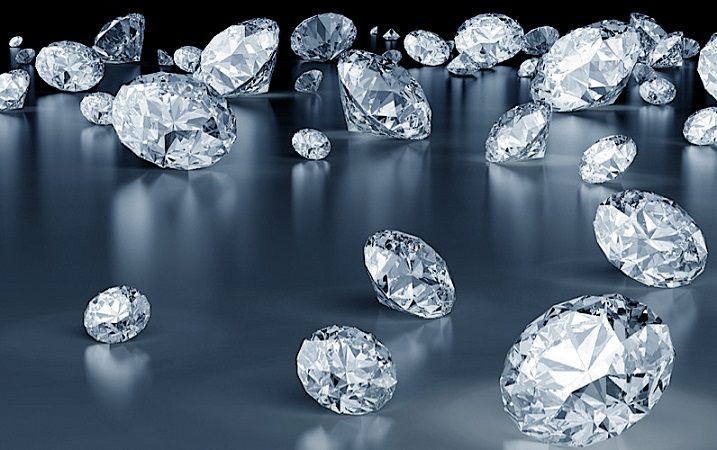
Title: The global diamond market is entering a stormy new phase due a variety of prevailing factors
Image Credit: De Beers
This Gems and Jewellery News report highlights how demand for VVS clarity 0.30-carat goods surged, fueled by Indian buyers and modest recovery signs from China. Yet, under this surface-level market activity, uncertainty looms large. The ongoing tariff wrangling between the U.S. — the world’s largest consumer of polished diamonds — and India — the premier global hub for cutting and polishing — has cast a shadow over the industry’s immediate future. Outside the U.S., trade has slowed dramatically, but domestically, transactions remain steady, with prices reflecting the anticipation of higher costs once tariffs hit.
Panic Buying Spurs Inventory Glut
Faced with a possible 26% tariff on Indian diamonds originally set for April 9, U.S. diamond traders and retailers scrambled to front-load their inventories. Over $2 billion worth of goods were shipped to the U.S. in a bid to avoid the added costs. Now, U.S. inventories are reportedly 30% tariff-free, based on data from the National Bureau of Economic Research (NBER). While this strategy created a short-term buffer, it may also lead to severe restocking issues later in Q3, when importers will have to contend with the full brunt of the tariff hikes.
Simultaneously, Indian manufacturers are bracing for a slowdown as their most critical export destination tightens access. This disruption has affected every part of the supply chain. The Gemological Institute of America (GIA) halted U.S.-bound shipments and is now redirecting certification operations through Hong Kong and Dubai — a shift expected to create delays of up to three weeks for non-U.S. orders. Meanwhile, the deferral of the much-anticipated Cullinan diamond sale underscores mining sector concerns over falling demand and overstocked inventories.
Tepid Retail Outlook as Mother’s Day Nears
Retailers in the U.S. that were prepping for Mother’s Day on May 11, traditionally one of the busiest periods for jewelry sales were in for a disappointing sale. Already a recent survey by the National Retail Federation (NRF) indicated that consumer spending on jewelry may dip slightly this year compared to 2023. With inflation still affecting discretionary budgets, even a temporary price freeze — such as the one implemented by industry giant Signet — could backfire. Researchers at MIT’s Sloan School of Management have found that fixed pricing in inflationary times can reduce demand by as much as 20%.
The rough diamond segment also felt the pressure. Following an active March, April saw subdued activity. Anglo American warned that macroeconomic instability and tariff-related uncertainties would keep buyers cautious. De Beers reported a steep 44% year-on-year drop in first-quarter sales, totaling just US$520 million — a clear sign that the midstream is pulling back and waiting for clarity.
A Market on the Brink
The global diamond market is at a critical juncture. Between stockpiling strategies, shifting certification hubs, and strained global relations, the traditional flow of diamonds from mine to market has been disrupted in ways not seen in decades. As the U.S. and India maneuver their way through a delicate diplomatic and trade standoff, the industry must now contend with the likelihood of price volatility, logistical delays, and evolving consumer sentiment.
It is no longer just about supply and demand — it’s about navigating an unstable geopolitical and economic landscape that could reshape the diamond sector for years to come. Industry leaders and stakeholders will need to remain agile and strategic as they face what could be a prolonged period of unpredictability and disruption.
For the latest Gems and Jewellery News, keep on logging to Bangkok Gems News.