

Key points
- The Golconda Blue’s roots trace back to the famed Golconda mines of southern India, regarded as the earliest known diamond sources in the world, with literary references dating back to a 4th-century Sanskrit text.
- After a series of illustrious owners, including famed American jeweler Harry Winston, the diamond eventually made its way into a bespoke JAR ring and to its current private owner, who has chosen to keep the gem within the family.
- Originally slated to headline the Christie’s Magnificent Jewels auction in Geneva on May 14, the mesmerizing pear-shaped fancy vivid blue diamond, mounted in a custom ring by legendary jeweler JAR, was estimated to fetch between $35 million and $50 million.
Gems and Jewellery News: A Royal Gem’s Sudden Withdrawal
In a stunning turn of events that has captivated the global gem and jewelry community, the highly anticipated sale of the 23.24-carat “Golconda Blue” diamond has been abruptly canceled. Originally slated to headline the Christie’s Magnificent Jewels auction in Geneva on May 14, the mesmerizing pear-shaped fancy vivid blue diamond, mounted in a custom ring by legendary jeweler JAR, was estimated to fetch between $35 million and $50 million. However, just weeks before the auction, the unnamed owner decided to withdraw the diamond from the public sale in favor of a private family transaction.
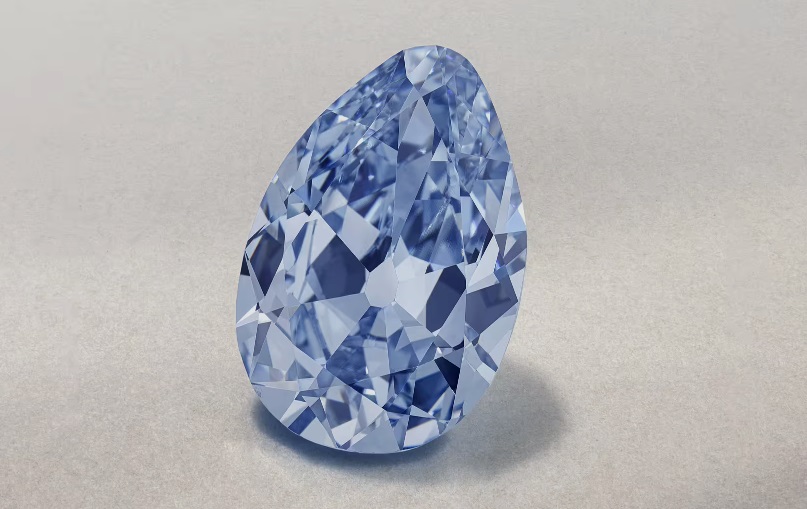
Title: The 23.24-carat “Golconda Blue” diamond is one of the largest fancy vivid blue diamonds in the world
Image Credit: Christie’s
This Gems and Jewellery News report comes as a surprise to collectors and connoisseurs alike, as the diamond had been attracting massive interest while touring internationally. Most recently on display in Hong Kong, the “Golconda Blue” was touted as one of the rarest and most historically significant diamonds to ever grace an auction catalogue.
A Gem with Royal Roots and Global Prestige
The Golconda Blue’s roots trace back to the famed Golconda mines of southern India, regarded as the earliest known diamond sources in the world, with literary references dating back to a 4th-century Sanskrit text. These mines once produced the Koh-i-Noor and other legendary stones. The blue diamond also boasts extraordinary provenance, having been in the possession of Yeshwant Rao Holkar II, the Maharaja of Indore, during the 1920s and 1930s.
The diamond originally formed part of an opulent necklace created by the French house Mauboussin, incorporating both the Golconda Blue and the famous Indore Pears—two diamonds over 40 carats each. The piece was immortalized in a portrait of the Maharani of Indore by celebrated French painter Bernard Boutet de Monvel. After a series of illustrious owners, including famed American jeweler Harry Winston, the diamond eventually made its way into a bespoke JAR ring and to its current private owner, who has chosen to keep the gem within the family.
Why the Diamond Was Pulled
Christie’s confirmed in a statement that the decision to cancel the auction sale was purely personal. A spokesperson emphasized that neither global tariffs nor economic instability played any role in the withdrawal. Instead, the family simply decided to retain the diamond and proceed with a private sale to a relative.
Rahul Kadakia, Christie’s International Head of Jewelry, previously described the diamond as “one of the rarest blue diamonds in the world,” praising its royal provenance, vivid coloration, and exceptional size. “Exceptional noble gems of this caliber come to market once in a lifetime,” he noted, underscoring the rarity of such a jewel becoming available for public bidding.
The Legacy of the Golconda Blue Lives On
Although the Golconda Blue will not be gracing the auction block this season, Christie’s Geneva event will still feature a notable 21-piece private collection of jewelry by JAR—one of the largest such offerings ever assembled. Meanwhile, the legend of the Golconda Blue continues to grow, drawing on its rich lineage of royalty, master craftsmanship, and global admiration.
The Golconda Blue is more than just a stunning gemstone; it is a historical artifact representing centuries of global heritage, royal opulence, and refined artistry. With origins in India’s ancient mines, a journey through European high society, and a transformation by elite jewelers, its story bridges civilizations and generations. Its absence from the auction only adds to its mystique and value in the eyes of collectors and historians.
For the latest Gems and Jewellery News, keep on logging to Bangkok Gems News.