

Key points
- At the source, miners in Mozambique’s Montepuez fields, Myanmar’s storied Mogok Valley, and Madagascar’s artisanal sites see Bangkok as both an opportunity and a hurdle.
- On the consumer side, markets in Europe, China, and the Middle East respond in different but connected ways to Thai pricing.
- The nation’s quiet control over ruby prices is both a responsibility and a source of pride, ensuring its influence will endure well into the future.
Bangkok Gems News: Bangkok at the Center of the Ruby World
For decades, Bangkok has quietly but firmly held the reins of the global ruby trade. Industry experts often cite that up to 90 percent of rubies worldwide pass through Thailand at some point in their journey. Whether rough stones arrive from Mozambique, Madagascar, or Myanmar, they almost always travel through Bangkok and Chanthaburi before reaching luxury showcases in Paris, Dubai, or Shanghai. This Bangkok Gems News report explores how Bangkok’s position affects everyone in the chain—from miners at the source to international buyers seeking brilliance.

Unknown to many, all global prices of rubies are actually controlled by Bangkok
Image Credit: StockShots
How Thailand Shapes Ruby Prices
The secret of Thailand’s influence lies in its concentration of treatment houses, cutters, and exporters. Treatment facilities in Bangkok and Chanthaburi transform rough, low-clarity rubies into dazzling gems that command higher market values. Master cutters then add brilliance and symmetry, often doubling or tripling a stone’s worth. Export houses in Bangkok control timing and volume, releasing parcels strategically to maintain pricing power. In this way, Bangkok doesn’t just respond to global demand—it actively shapes it.
Miners on the Ground
At the source, miners in Mozambique’s Montepuez fields, Myanmar’s storied Mogok Valley, and Madagascar’s artisanal sites see Bangkok as both an opportunity and a hurdle. They recognize that only by passing through Thai channels can their stones achieve full value. Yet many also feel frustration, believing that middlemen and exporters in Bangkok capture far more profit than those who dig the stones out of the earth. Governments in Africa have begun exploring ways to keep more value locally, but Bangkok’s entrenched networks continue to hold sway.
Global Buyers and Their Response
On the consumer side, markets in Europe, China, and the Middle East respond in different but connected ways to Thai pricing. In Paris and Milan, luxury houses accept premium rates from Thai exporters but demand traceability and certificates to justify them. In China, scarcity created by Thai-controlled supply sparks even greater desire, with wealthy collectors competing fiercely for rare stones. In the Gulf states, buyers are less price-sensitive and often equate size and color intensity with status, trusting Bangkok’s exporters to deliver consistency. Across all regions, Bangkok’s pricing benchmarks remain the reference point.
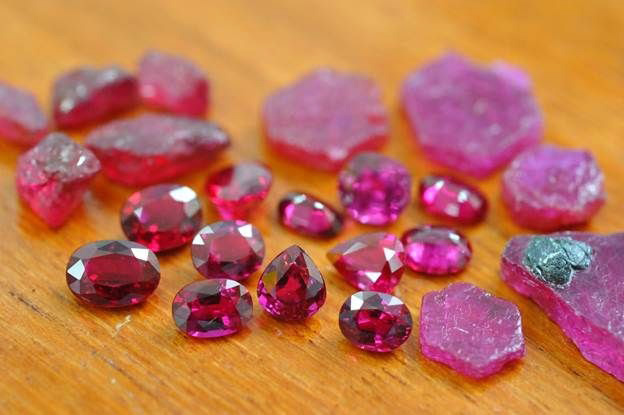
Unknown to many, all global prices of rubies are actually controlled by Bangkok
Image Credit: StockShots
The Fragile Balance of Trust
This influence comes with responsibilities. Exporters and treaters must constantly prove credibility to global buyers, especially as ethical sourcing and transparency become non-negotiable. Meanwhile, miners push for fairer compensation, and new technologies like blockchain tracing threaten to disrupt long-standing practices. Yet Thailand has proven resilient before, adapting to shifts in supply, sanctions, and consumer expectations.
Thailand’s Enduring Role in the Ruby Power Chain
The ruby trade is more than just an exchange of gemstones; it is a chain of power, trust, and craftsmanship. Thailand sits at its core, transforming rough stones into cultural and financial symbols that travel the world. Miners may grumble about margins, and buyers may press for transparency, but the credibility and expertise cultivated in Bangkok keep the system running. Thailand’s role is not only economic but also cultural: it projects an image of precision, artistry, and reliability that no other hub has yet matched. In the years ahead, as demand for ethical gems grows and competition rises, Bangkok’s challenge will be to retain this leadership by proving that it can balance tradition with innovation. The nation’s quiet control over ruby prices is both a responsibility and a source of pride, ensuring its influence will endure well into the future.
For the latest on the Ruby trade, keep on logging to Bangkok Gems News.