

Key points
- “Only after I returned to Munich and took the gem to a lab did I find out it was treated glass.
- According to industry insiders and whistleblowers interviewed by Bangkok Gems News, the scam has intensified over the past two years, with criminals targeting first-time buyers and tourists looking to invest in what they believe are certified rubies, sapphires, or emeralds.
- If you believe you’ve received a fake certificate, contact the lab listed on the document to verify it, and report the seller to….
Bangkok Gems News: Tourists Tricked by Glittering Lies
In the heart of Bangkok’s bustling gem districts—Silom, Mahesak, and parts of Yaowarat—a growing underground trade is duping unsuspecting foreign buyers with fake gemstone certification papers. These counterfeit documents, which mimic the layout and logos of prestigious gemological labs, are fueling an illicit black market that threatens to undermine Thailand’s long-standing reputation as a global gem hub.
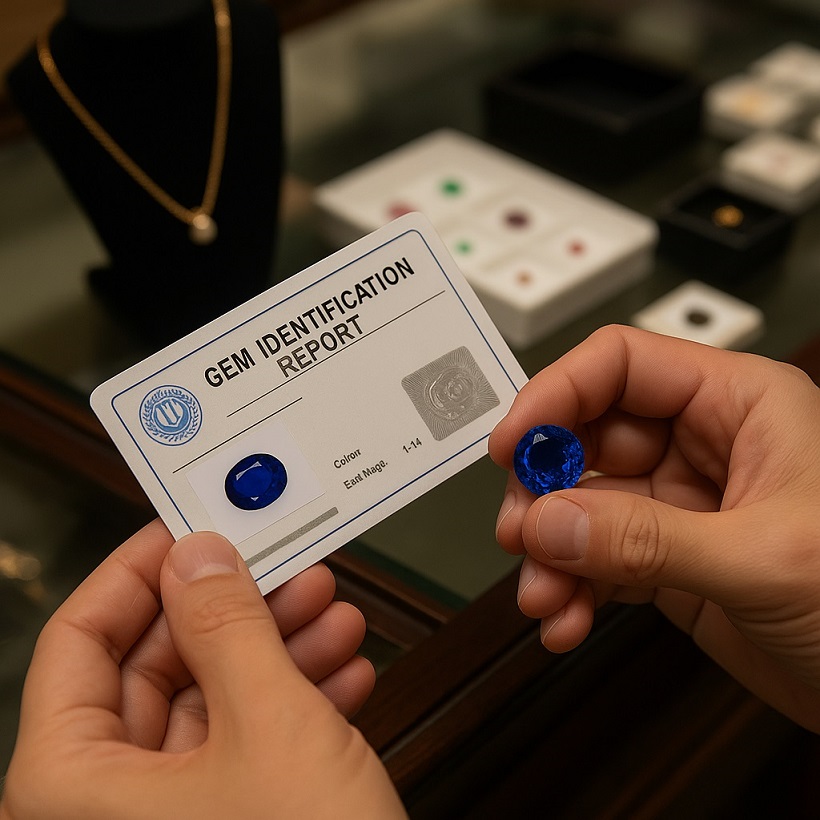
Fake Gem Certifications – a new scam in Thailand
Image Credit: AI-Generated
According to industry insiders and whistleblowers interviewed by Bangkok Gems News, the scam has intensified over the past two years, with criminals targeting first-time buyers and tourists looking to invest in what they believe are certified rubies, sapphires, or emeralds. In many cases, these fraudulent certificates come with an added layer of deception—convincing salespeople, rented showrooms, and even fake “gemologists” posing as experts.
Forgery That Looks Flawlessly Real
The fake certificates are often nearly indistinguishable from real ones. Using high-grade printing machines, scammers reproduce logos from respected organizations like the GIA (Gemological Institute of America), GIT (Gem and Jewelry Institute of Thailand), and IGI (International Gemological Institute). The paper quality, holograms, and serial numbers are often so convincing that even seasoned buyers can be misled.
One victim, a German tourist named Tobias L., paid over 9,000 euros for what he was told was a flawless Burmese ruby. “The seller even handed me a laminated certificate with watermarks and a microchip sticker. It looked completely legitimate,” Tobias recalled. “Only after I returned to Munich and took the gem to a lab did I find out it was treated glass.”
Fake Labs and Complicit Retailers
What makes this black market so difficult to dismantle is the involvement of a network that extends beyond petty criminals. Industry sources say that some smaller retailers, especially in high-tourist traffic areas, knowingly offer fake certificates alongside lower-quality stones. These shops often pay local printing shops to create customized reports using template software easily found on the dark web. There are also reports of gangs involving Indians from India, Russians and Local Thais involved in this fake gem certificates.
Even more troubling are fake gem labs that operate as real businesses. Set up in inconspicuous buildings and run by individuals with rudimentary gemology knowledge, these “labs” provide certification for as little as 300 baht. In return, buyers receive an official-looking document that misrepresents the gem’s grade, origin, or authenticity. Some of these labs even have a presence online, complete with customer reviews and fake affiliations.
Authorities Struggling to Catch Up
Thailand’s Department of Special Investigation (DSI) and the Office of Consumer Protection Board (OCPB) have launched sporadic crackdowns, but enforcement remains inconsistent. “For every fake lab we shut down, two more pop up,” said a DSI officer who requested anonymity. “The equipment is cheap, the penalties are light, and many victims don’t file reports because they’ve already returned home.”
Industry experts believe that the proliferation of fake certificates could damage Thailand’s global gemstone credibility if not addressed urgently. “Thailand has always prided itself as a leader in the colored gemstone market,” said Supachai R., a certified gemologist in Bangkok. “If we lose buyers’ trust, that reputation will collapse.”
How to Protect Yourself
Buyers—especially foreigners—are urged to take extra precautions when purchasing gems in Bangkok. Here are a few practical steps to avoid falling victim:
-Always ask for verification from a known and reputable gem lab (like GIA or GIT).
-Insist on testing at a lab of your choice before purchasing.
-Avoid deals that feel rushed or “too good to be true.”
-Do independent research on the seller.
-Use a trusted local gemologist or broker to inspect the stone.
Most importantly, avoid any gems traders, jewellery manufacturers or jewelry retail shops that are not covered or are not mentioned in Bangkok Gems News.
If you believe you’ve received a fake certificate, contact the lab listed on the document to verify it, and report the seller to Thai authorities or your consulate.
As Bangkok’s gem sector battles to protect its integrity, the surge in fraudulent certificates is a stark reminder that even in the city of jewels, not everything that glitters is gold—or even real. Industry regulators and honest retailers must work together to crack down on these deceptive practices before international trust is irreparably lost.
For the latest on fake gem certificates, keep on logging to Bangkok Gems News.