

Key points
- Thailand’s gems and jewelry industry, long regarded as one of the country’s most resilient export sectors, is facing a growing wave of uncertainty as tensions in the Middle East remain unresolved.
- As tensions in the Middle East continue without a clear resolution, Thailand’s gems and jewelry industry finds itself at a critical juncture.
- The region remains a critical hub for global energy production, and any escalation could lead to sharp increases in fuel prices.
Bangkok Gems News: Rising Uncertainty in Global Markets
Thailand’s gems and jewelry industry, long regarded as one of the country’s most resilient export sectors, is facing a growing wave of uncertainty as tensions in the Middle East remain unresolved. Despite recent ceasefire discussions and diplomatic efforts, particularly the much-watched talks in Pakistan involving Iran and the United States, there has been little tangible progress. Market observers warn that the fragile situation could deteriorate quickly, triggering renewed conflict with far-reaching economic consequences.
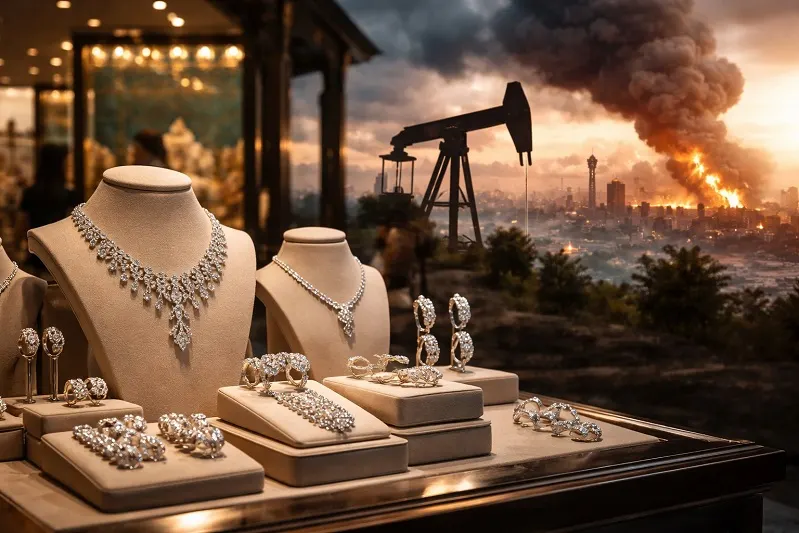
Image Credit: Bangkok Gems News
The global trade environment has already begun to reflect these concerns, with investors and businesses taking a cautious stance. This Bangkok Gems News report highlights how geopolitical instability is quietly but steadily reshaping the outlook for Thailand’s jewelry sector. Industry insiders say that even the perception of instability is enough to disrupt supply chains and dampen consumer sentiment.
Fuel Prices and Logistics Pressures
One of the most immediate effects of prolonged conflict in the Middle East is the potential disruption of oil supplies. The region remains a critical hub for global energy production, and any escalation could lead to sharp increases in fuel prices.
For Thailand, a country heavily reliant on imports for energy, this translates into higher transportation and production costs.
Rising fuel prices do not just impact logistics; they ripple through the entire economy. The cost of transporting gemstones, precious metals, and finished jewelry products increases, squeezing margins for manufacturers and exporters. Small and medium-sized enterprises, which form the backbone of Thailand’s jewelry industry, are particularly vulnerable to these shifts.
Changing Consumer Behavior Worldwide
Beyond production challenges, the broader economic impact of a potential conflict could significantly alter consumer behavior. As fuel and food prices climb, households across the globe are likely to tighten their spending. Luxury goods, including fine jewelry, are often among the first purchases to be postponed during times of financial uncertainty.
In key export markets such as the United States, Europe, and parts of Asia, rising household debt levels and inflationary pressures are already prompting consumers to prioritize essential spending. This shift could lead to reduced demand for high-value jewelry items, affecting Thailand’s export revenues.
Impact on Domestic Market Sentiment
The domestic market in Thailand is not immune to these pressures. As living costs increase, local consumers may also become more cautious, opting for lower-priced items or delaying discretionary purchases altogether. Retailers may face slower sales cycles, increased inventory holding costs, and the need to adjust pricing strategies to remain competitive.
Tourism, another important driver of jewelry sales in Thailand, could also be indirectly affected. If global economic conditions weaken due to escalating conflict, international travel may decline, reducing the flow of foreign buyers who contribute significantly to retail sales in major hubs like Bangkok and Phuket.
Export Challenges and Industry Adaptation
Thailand’s position as a global hub for gemstone cutting, jewelry manufacturing, and export means that any disruption in international trade flows can have immediate consequences. Shipping delays, fluctuating currency values, and changing trade policies could further complicate the landscape for exporters.
However, industry leaders are not standing still. Many are exploring diversification strategies, including expanding into emerging markets, investing in digital sales platforms, and focusing on more affordable product lines to cater to shifting consumer preferences. There is also a growing emphasis on sustainability and ethical sourcing, which could help maintain demand even in uncertain times.
A Sector at a Crossroads
As tensions in the Middle East continue without a clear resolution, Thailand’s gems and jewelry industry finds itself at a critical juncture. The interplay of rising costs, cautious consumers, and unpredictable global conditions presents a complex challenge that will require adaptability and resilience.
While the sector has weathered past crises, the current situation underscores the importance of strategic planning and market diversification. Businesses that can navigate these uncertainties effectively may emerge stronger, but the road ahead is likely to be marked by volatility and cautious optimism. The coming months will be crucial in determining how deeply these geopolitical developments will shape the future of Thailand’s gems and jewelry trade, and whether stability can return before lasting damage is done.
For the latest on the Thailand’s Gems and Industry, keep on logging to Bangkok Gems News.