

Key points
- Please note that if any official or individual from the gems trade claims that these highlighted issues are not true…challenge them to buy back your diamond jewelry or loose diamonds at the price that you paid for or at the current market prices.
- In what many industry insiders are now calling a silent crisis, consumers across Bangkok are finding it increasingly difficult to sell off their diamond jewelry, exposing a sharp shift in the city’s once-thriving secondary luxury market.
- Even in cases where items are considered, shop owners are only willing to pay based on the weight of the gold or platinum setting, assigning absolutely no monetary value to the diamonds themselves.
Bangkok Gems News: In what many industry insiders are now calling a silent crisis, consumers across Bangkok are finding it increasingly difficult to sell off their diamond jewelry, exposing a sharp shift in the city’s once-thriving secondary luxury market. What was once considered a reliable store of value is now turning into a frustrating and often costly burden for owners trying to liquidate their assets.
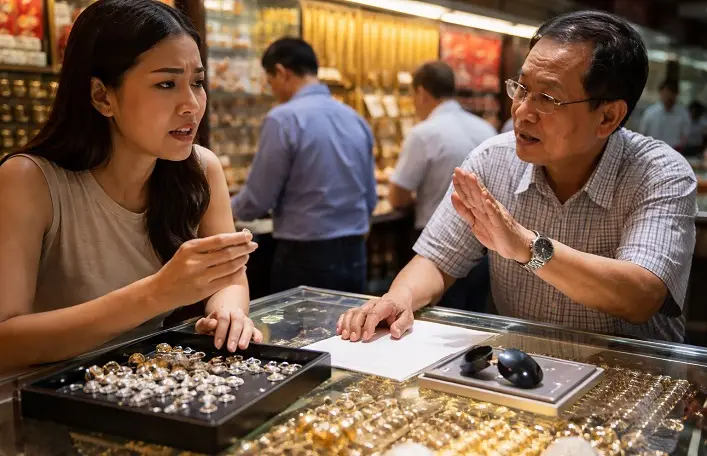
Image Credit: Bangkok Gems News
Across key commercial districts and traditional trading hubs, pawnshops are reportedly refusing to accept diamond jewelry altogether. Even in cases where items are considered, shop owners are only willing to pay based on the weight of the gold or platinum setting, assigning absolutely no monetary value to the diamonds themselves. This Bangkok Gems News report highlights a growing disconnect between consumer expectations and the current realities of the resale market, raising serious concerns about the long-term value perception of diamonds.
Pawnshops Turn Away Diamonds
For decades, pawnshops served as a convenient exit route for individuals needing quick liquidity. However, that safety net appears to be rapidly disappearing. Several pawnshop operators cite declining resale demand, difficulty in verifying authenticity, and volatile pricing as key reasons behind their reluctance to accept diamonds.
Industry voices suggest that the rise of lab-grown diamonds has further complicated the landscape. With these alternatives becoming more affordable and visually indistinguishable from natural stones, traditional diamonds are facing increasing pressure. As a result, resale buyers are exercising extreme caution, often opting to avoid the category entirely rather than risk overpaying.
Retailers Backtrack on Buyback Promises
Equally troubling for consumers is the apparent shift in policy among jewelry retailers. Many customers claim that stores from which they originally purchased diamond jewelry are now unwilling to honor previous buyback assurances. In some cases, retailers had marketed guarantees to repurchase items at 20 to 30 percent below the original sale price, creating a sense of security for buyers.
Today, those promises appear to be quietly fading. Customers report being turned away or offered significantly lower valuations than expected. This has led to growing dissatisfaction and a sense of mistrust toward the retail sector, particularly among middle-class buyers who invested in diamonds as both adornment and financial fallback.
Changing Perceptions of Value
Market analysts believe that the issue extends beyond Bangkok and reflects a broader global shift. Diamonds, once heavily marketed as rare and appreciating assets, are increasingly being viewed as depreciating luxury goods. The lack of a standardized resale framework, combined with oversupply and changing consumer preferences, has weakened their standing as an investment.
Younger consumers, in particular, are showing less interest in traditional diamond jewelry, opting instead for experiences or alternative luxury goods. This generational change is further reducing demand in secondary markets, leaving existing owners with limited options.
A Market in Transition
What is unfolding in Bangkok may well signal a turning point for the diamond industry in the region. As liquidity dries up and resale channels shrink, consumers are being forced to reassess the true value of their purchases. The notion that diamonds can easily be converted back into cash is being challenged in real time.
Moving forward, both retailers and buyers may need to adopt more transparent practices and realistic expectations. Without structural changes, the gap between perceived and actual value is likely to widen, potentially reshaping the market for years to come. The current situation serves as a stark reminder that not all luxury assets retain their worth, especially in rapidly evolving economic environments.
Please note that if any official or individual from the gems trade claims that these highlighted issues are not true…challenge them to buy back your diamond jewelry or loose diamonds at the price that you paid for or at the current market prices. (Whichever is higher).
For the latest on natural diamonds losing their value, keep on logging to Bangkok Gems News.