

Key points
- The development is being viewed as one of the most significant events in the global diamond industry in recent years, offering renewed optimism for the future of the natural diamond sector after a prolonged market downturn.
- Anglo American announced its intention to sell its controlling 85 percent stake in De Beers in May 2024 as part of a sweeping corporate restructuring that would allow the mining giant to focus on commodities including copper, premium iron ore and crop nutrients.
- Penny served as a member of the De Beers board before becoming Group Chief Executive between 2006 and 2010, giving him an intimate understanding of both the company’s operations and the wider global diamond market.
Gems and Jewelry News: The long-awaited sale of De Beers appears to have entered its most decisive phase, with reports indicating that Anglo American has selected the Global Diamond Consortium, led by former De Beers Chief Executive Gareth Penny, as its preferred bidder. The development is being viewed as one of the most significant events in the global diamond industry in recent years, offering renewed optimism for the future of the natural diamond sector after a prolonged market downturn. Midway through this unfolding story, this Gems and Jewelry News report examines why the proposed acquisition could have far-reaching implications for diamond producers, manufacturers, traders and retailers around the world.
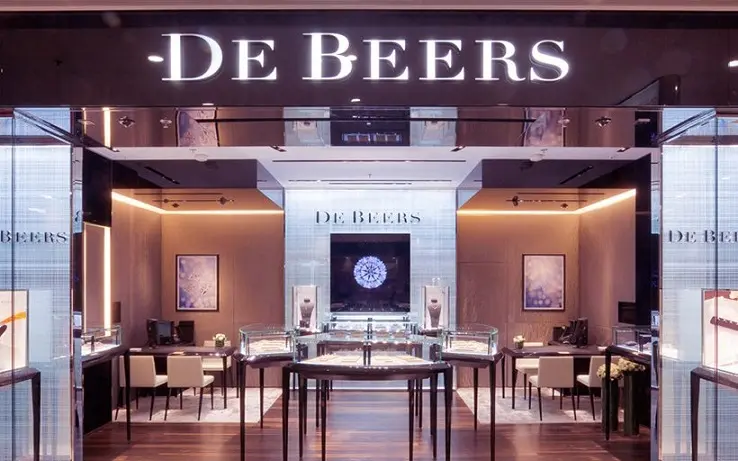
Image Credit: StockShots
Anglo American announced its intention to sell its controlling 85 percent stake in De Beers in May 2024 as part of a sweeping corporate restructuring that would allow the mining giant to focus on commodities including copper, premium iron ore and crop nutrients. After an extensive competitive bidding process involving three shortlisted groups, the company has reportedly identified the Global Diamond Consortium as its preferred purchaser. Although the selection marks a major milestone, the transaction remains subject to government approvals and additional negotiations before it can be completed.
Botswana Holds the Key
While Anglo American has chosen its preferred bidder, Botswana remains central to the future ownership of De Beers. The southern African nation already owns the remaining 15 percent stake in the diamond giant and possesses the right of first refusal over Anglo American’s holding.
Botswana’s Minister for State President, Defence and Security, Moeti Mohwasa, confirmed that the Global Diamond Consortium had emerged as the preferred bidder following the competitive process. However, he emphasized that Botswana retains complete freedom to join the consortium as a partner, acquire the stake independently or work alongside another investor.
Government advisers are currently evaluating the available options, with Mohwasa stating that the transaction is expected to be finalized during the final quarter of 2026, subject to regulatory approvals and other commercial considerations.
Gareth Penny Brings Extensive Experience
The selection of Gareth Penny has attracted considerable attention throughout the diamond industry. Penny served as a member of the De Beers board before becoming Group Chief Executive between 2006 and 2010, giving him an intimate understanding of both the company’s operations and the wider global diamond market.

Image Credit: StockShots
Although Penny has remained largely silent regarding the consortium’s bid, he recently shared insights into his leadership philosophy during an industry podcast interview. He explained that effective leadership requires listening before speaking, encouraging diverse viewpoints and ensuring that board members feel comfortable expressing independent opinions.
Penny has consistently advocated for bringing together experienced industry professionals and individuals from different business backgrounds capable of contributing fresh ideas. He also believes younger generations should play an increasingly active role within the diamond industry, particularly among the family-owned businesses that form a substantial part of De Beers’ customer base.
Throughout his career, Penny has maintained that management decisions should always focus on creating value for all shareholders rather than favoring individual interests, a principle that many observers believe could prove valuable if the acquisition proceeds.
Challenging Conditions Prompted the Sale
The planned divestment comes during one of the most difficult periods in De Beers’ modern history. Natural diamond prices have fallen sharply since 2022 due to slowing luxury spending, particularly in China, excess inventories throughout the supply chain and growing competition from laboratory-grown diamonds.
Although De Beers generated approximately US$3.5 billion in revenue during 2025, market conditions remained challenging. Rough diamond sales improved modestly, but average realized prices continued to decline, reflecting ongoing weakness in global demand.
The difficult trading environment has significantly reduced the company’s valuation. Anglo American has recorded successive multi-billion-dollar impairments against De Beers over the past three years, cutting the business’s carrying value to approximately US$2.3 billion.
Operational adjustments have accompanied the financial challenges. De Beers recently announced a two-year production suspension at South Africa’s Venetia Mine, one of its largest operations, as part of broader cost-cutting measures and efforts to balance supply with market demand.
African Nations Seek a Larger Role
Beyond the commercial transaction itself, the proposed sale has evolved into a broader discussion about African ownership within one of the world’s most recognized diamond companies.
Reports indicate that the Global Diamond Consortium’s proposal could involve participation from both Angola and Namibia, two countries with substantial diamond industries that have expressed interest in De Beers’ future ownership structure.
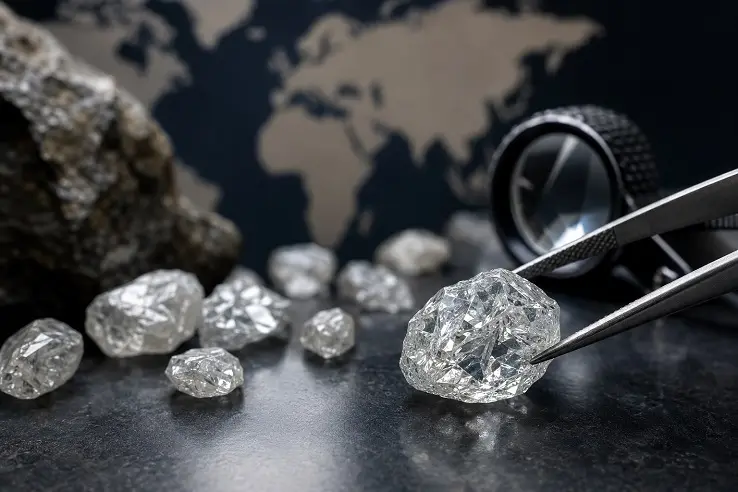
Image Credit: StockShots
Botswana has reportedly welcomed this possibility, recognizing that stronger African participation could align ownership more closely with the countries responsible for producing much of De Beers’ diamond supply. However, the consortium’s complete ownership structure, financing arrangements and additional partners have not yet been publicly disclosed.
Such a partnership could strengthen cooperation between major African diamond-producing nations while preserving De Beers’ position as a vertically integrated company involved in exploration, mining, sorting, marketing and branding.
Botswana’s Economic Interests Are Significant
Botswana’s influence extends far beyond its 15 percent shareholding. Through Debswana, the 50-50 joint venture between De Beers and the Botswana government, the country supplies approximately 70 percent of De Beers’ total diamond production.
Diamonds remain the backbone of Botswana’s economy, accounting for roughly three-quarters of foreign exchange earnings and approximately one-third of government revenue. During 2025, the precious stones represented more than 70 percent of the country’s merchandise exports.
Earlier agreements signed between Botswana and De Beers strengthened the government’s position by extending mining licences through 2054 while gradually increasing the proportion of production marketed through Botswana’s state-owned Okavango Diamond Company.
Acquiring a larger ownership interest would provide Botswana with greater influence over mining, marketing and international distribution. However, it would also expose the country to greater financial risks while the natural diamond market continues its recovery.
Industry Watches the Next Chapter
Several prominent investors reportedly examined participation during the bidding process, including former De Beers executive Bruce Cleaver, Australian mining veteran Michael O’Keeffe, Israeli businessman Nir Livnat and investment interests from Qatar.
The selection of Gareth Penny’s consortium nevertheless suggests that Anglo American values experienced industry leadership capable of restoring confidence in De Beers while preserving the company’s unique position across the global diamond pipeline.
Many analysts believe the preferred bidders are investing with a long-term outlook, anticipating that natural diamond prices will gradually strengthen as inventories decline and consumer demand improves.
The company that ultimately acquires De Beers will inherit world-class mining assets, globally recognized brands and longstanding partnerships with several African governments. At the same time, it will also inherit the challenge of navigating an industry undergoing significant transformation as consumer preferences evolve and competition intensifies.
Botswana’s final decision will be closely watched across the international diamond community because it has the potential to shape not only the future ownership of De Beers but also the balance of influence within the global natural diamond industry. Whether the government joins Gareth Penny’s consortium, exercises its own acquisition rights or pursues an alternative partnership, the outcome is expected to become one of the defining developments in the diamond sector for years to come.
For more on De Beers, visit:
For the latest Gems and Jewelry News, keep on logging to Bangkok Gems News.