

Key points
- In what many analysts now view as a defining inflection point, this Gems and Jewelry News report highlights how the once-stable diamond market is facing unprecedented volatility, forcing even the most established retailers to rethink their strategies.
- The global jewelry industry is entering a period of profound transformation, with one of its most dominant players, Signet Jewelers, announcing sweeping changes that signal deeper structural shifts across the market.
- The 77-year-old jewelry giant has revealed plans to close approximately 100 stores and streamline its brand portfolio, underscoring mounting pressures from rising gold prices and the accelerating popularity of lab-grown diamonds.
Gems and Jewely News: The global jewelry industry is entering a period of profound transformation, with one of its most dominant players, Signet Jewelers, announcing sweeping changes that signal deeper structural shifts across the market. The 77-year-old jewelry giant has revealed plans to close approximately 100 stores and streamline its brand portfolio, underscoring mounting pressures from rising gold prices and the accelerating popularity of lab-grown diamonds.

Image Credit: StockShots
For decades, diamonds symbolized permanence, wealth, and prestige. However, shifting consumer preferences, coupled with disruptive technological advancements, are rapidly altering that narrative. In what many analysts now view as a defining inflection point, this Gems and Jewelry News report highlights how the once-stable diamond market is facing unprecedented volatility, forcing even the most established retailers to rethink their strategies.
A Strategic Reset for a Changing Market
Signet’s restructuring plan focuses on consolidating its operations around three core brands: Kay Jewelers, Zales, and Jared. These banners have demonstrated consistent growth and now represent nearly 70 percent of the company’s total revenue. By narrowing its focus, the company aims to improve operational efficiency, streamline decision-making, and enhance customer engagement across both physical and digital platforms.
The company currently operates nearly 2,600 locations across North America and the United Kingdom, spanning multiple brands including Blue Nile, James Allen, Banter by Piercing Pagoda, and others. As part of the restructuring, certain smaller or underperforming brands will be absorbed into larger ones. For example, James Allen will transition into a proprietary collection within Blue Nile, while Rocksbox will be integrated into Kay Jewelers.
Alongside brand consolidation, Signet plans to renovate nearly 10 percent of its stores, a move intended to modernize retail environments and improve customer experience. This is a significant increase from earlier renovation targets and reflects the company’s commitment to adapting to evolving consumer expectations.
Store Closures Reflect Deeper Industry Challenges
The planned closure of approximately 100 stores is not merely a cost-cutting measure but a strategic recalibration. These closures are expected to primarily affect underperforming locations, particularly those situated in declining mall environments or outside the company’s core brand focus.
As of early 2026, Signet operated over 2,500 stores globally, with the majority located in the United States. The decision to reduce its physical footprint aligns with broader retail trends, where companies are increasingly prioritizing efficiency, profitability, and digital integration over sheer scale.
Financially, the company has shown mixed performance. While full-year same-store sales saw a modest increase of 1.3 percent, fourth-quarter figures declined slightly. However, profitability improved significantly, with operating income rising sharply compared to the previous year. This suggests that while revenue growth remains uneven, cost management and strategic adjustments are beginning to yield results.
The Rise of Lab-Grown Diamonds and Falling Natural Prices
One of the most disruptive forces reshaping the industry is the rapid rise of lab-grown diamonds. These stones, virtually identical to natural diamonds in appearance and composition, are significantly more affordable and increasingly preferred by younger consumers.
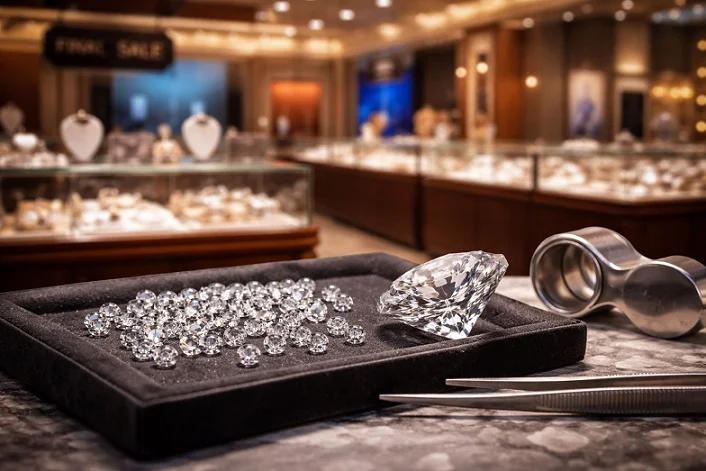
Image Credit: StockShots
This shift has led to a supply-demand imbalance in the natural diamond market, driving prices downward. Retailers are now grappling with excess inventory and declining margins, a stark contrast to the stability that once defined the sector.
At the same time, gold prices have surged to near-record levels, fueled by global economic uncertainty, geopolitical tensions, and strong demand from central banks. This divergence between gold and diamonds highlights a fundamental shift in how consumers and investors perceive value within the jewelry space.
Mounting Pressures Across the Diamond Ecosystem
Recent developments across the diamond supply chain further reinforce concerns about the long-term viability of natural diamonds. Major mining operations have reported declining sales volumes, while industry leaders like De Beers have faced increasing challenges in maintaining pricing stability.
Auction results, wholesale demand, and retailer inventories all point to a market struggling with oversupply and weakening consumer interest. Even historically strong markets have shown signs of fatigue, with buyers gravitating toward more affordable and sustainable alternatives.
These trends suggest that the challenges facing natural diamonds are not temporary but structural. The traditional narrative of rarity and enduring value is being questioned as lab-grown options become more accessible and socially accepted.
A Stark Warning for Diamond Holders
Perhaps the most controversial perspective emerging from current market dynamics is the growing belief that natural diamonds may be approaching a long-term decline in value. With prices already under pressure and supply continuing to outpace demand, some analysts argue that the market could face a prolonged downturn.
Consumers and investors who have long viewed diamonds as a store of wealth may need to reassess their positions. The combination of technological disruption, shifting consumer preferences, and macroeconomic factors suggests that the resale value of natural diamonds could diminish significantly in the coming years.
In this context, some industry observers are advising individuals to consider liquidating their diamond holdings before further depreciation occurs. While this view remains debated, it reflects the increasing uncertainty surrounding the future of the natural diamond market.
Industry at a Crossroads
The broader jewelry industry is now navigating a complex landscape defined by rising material costs, evolving consumer behavior, and rapid technological change. Companies like Signet are attempting to adapt through restructuring, brand consolidation, and strategic investments in high-performing segments.
At the same time, competitors are exploring alternative materials and innovative designs to maintain profitability and appeal. This period of transition is likely to redefine the industry’s structure, with agility and adaptability becoming critical success factors.
The developments unfolding today point to a future where traditional assumptions about value, rarity, and luxury are being fundamentally reexamined. The actions taken by major players now will shape the trajectory of the industry for years to come.
The reality facing the diamond industry is becoming increasingly difficult to ignore. While diamonds have long been marketed as timeless assets, current trends suggest a very different future may be unfolding. The convergence of declining prices, rising competition from lab-grown alternatives, and weakening demand signals a potential shift that could redefine the market entirely. For investors, retailers, and consumers alike, this moment represents both a warning and an opportunity to reassess long-held beliefs about value and luxury in a rapidly changing world.
For more on Signet Jewelers, visit:
https://www.signetjewelers.com/our-home/default.aspx
For the latest Gems and Jewelry News, keep on logging to Bangkok Gems News.