

Key points
- Once the laboratory issues a report reflecting those findings, this Gems and Jewelry News report notes that dishonest parties are allegedly re-filling the fissures with oil or artificial resin before offering the stones for sale while still presenting the original laboratory report.
- To combat the problem, SSEF is urging all participants in the gemstone trade to verify the authenticity of laboratory reports and to arrange fresh testing before completing major transactions.
- The global gemstone industry is facing renewed concerns over a deceptive practice involving emerald treatments, prompting the Swiss Gemmological Institute (SSEF) to issue a formal trade alert warning dealers, collectors, auction houses and buyers to exercise greater caution when evaluating high-value emeralds.
Gems and Jewelry News: The global gemstone industry is facing renewed concerns over a deceptive practice involving emerald treatments, prompting the Swiss Gemmological Institute (SSEF) to issue a formal trade alert warning dealers, collectors, auction houses and buyers to exercise greater caution when evaluating high-value emeralds.
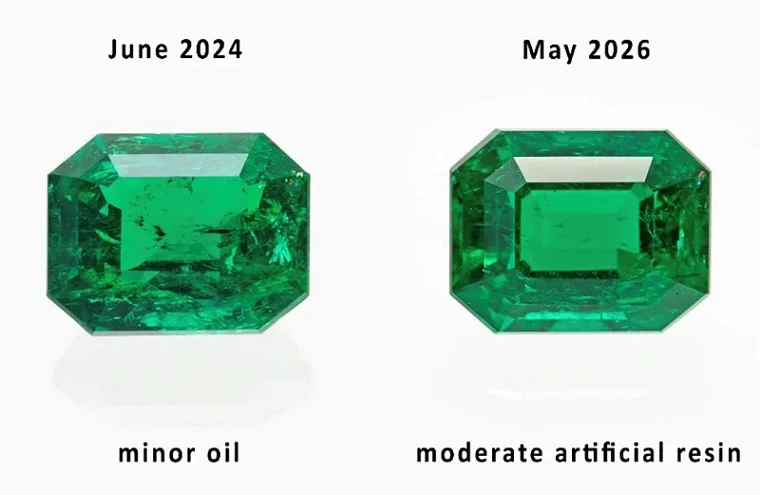
Image Credit: SSEF
Emeralds are among the world’s most prized gemstones, but they are also well known for containing natural fissures. For decades, the trade has accepted the practice of reducing the visibility of these fissures through the use of colourless fillers such as oil, wax and artificial resin. However, international guidelines require full disclosure of any such treatment because the extent of clarity enhancement has a direct impact on a stone’s value and desirability.
In its latest warning, SSEF highlighted a fraudulent scheme that has been reappearing in the marketplace. According to the institute, some emeralds are being chemically cleaned to remove existing fillers before being submitted to a laboratory for examination. At that stage, the gemstones may show little or no evidence of clarity enhancement. Once the laboratory issues a report reflecting those findings, this Gems and Jewelry News report notes that dishonest parties are allegedly re-filling the fissures with oil or artificial resin before offering the stones for sale while still presenting the original laboratory report.
The result is a serious misrepresentation of the gemstone’s actual condition. Buyers reviewing the report may believe they are purchasing an emerald with no clarity modification or only minimal treatment, when in reality the stone has undergone additional enhancement after certification.
According to industry sources, most of these scams are being perpetrated by Indian colorstone traders in various markets including Thailand, Dubai, India, London, New York and Shanghai.
Why the Practice Is Raising Alarm
The issue has become particularly significant because the luxury gemstone market increasingly favours emeralds that show little treatment or none at all. Such stones can command substantial premiums, creating a strong financial incentive for unethical traders to manipulate the appearance of gemstones.
SSEF stressed that every report issued by the institute only reflects the condition of a gemstone at the precise moment it was examined. The organization makes no guarantee regarding the condition of the stone at a later date. Whenever fissure filling is detected, SSEF records not only the presence of the treatment but also the amount used and the specific filler material involved, whether oil, resin or wax.
Industry experts note that the fraudulent practice undermines trust in gemstone certification and can create significant financial losses for unsuspecting buyers. The problem is not limited to emeralds alone. SSEF emphasized that similar risks exist with other fissured gemstones, particularly rubies, where clarity-enhancing treatments can also influence value.
Recommendations for Buyers and Dealers
To combat the problem, SSEF is urging all participants in the gemstone trade to verify the authenticity of laboratory reports and to arrange fresh testing before completing major transactions. The institute also advises caution when a visually clean emerald is accompanied by an older report indicating little or no treatment.
Sellers are being encouraged not to circulate outdated reports after a gemstone has been cleaned, refilled or altered in any way. Instead, a new laboratory examination should be obtained to accurately reflect the stone’s current condition. Additionally, cleaned or heavily fissured emeralds should be handled carefully because they can become more fragile and susceptible to chipping.
While industry sources have suggested that some cases have involved traders operating from various international trading centres, SSEF’s alert focuses on the treatment practice itself rather than attributing responsibility to any specific country or trading group.
The renewed warning serves as a reminder that transparency remains one of the most important foundations of the gemstone trade. As values continue to rise for premium emeralds, independent verification and updated certification are becoming increasingly essential safeguards. Buyers who rely solely on older reports may expose themselves to unnecessary risk, while sellers who maintain accurate disclosure practices help preserve confidence in the global gemstone marketplace.
For the latest Gems and Jewelry News, keep on logging to Bangkok Gems News.